The Watts bath has been the workhorse of nickel electroplating for more than a century. Oliver P. Watts published the formulation in 1916, and today it still sits under most decorative nickel-chrome work and a great deal of engineering nickel. The chemistry is simple, which is exactly why small lapses in maintenance show up so quickly on the parts.
This guide covers what goes into a Watts bath, the numbers worth watching every day, and how to trace the most common deposit problems back to their cause.
What goes into a Watts nickel bath
A Watts solution has three core ingredients. Brighteners and wetting agents are added on top, but they only work well when these three are in balance.
- Nickel sulphate (NiSO₄·6H₂O) is the main source of nickel ions. It makes up the bulk of the bath.
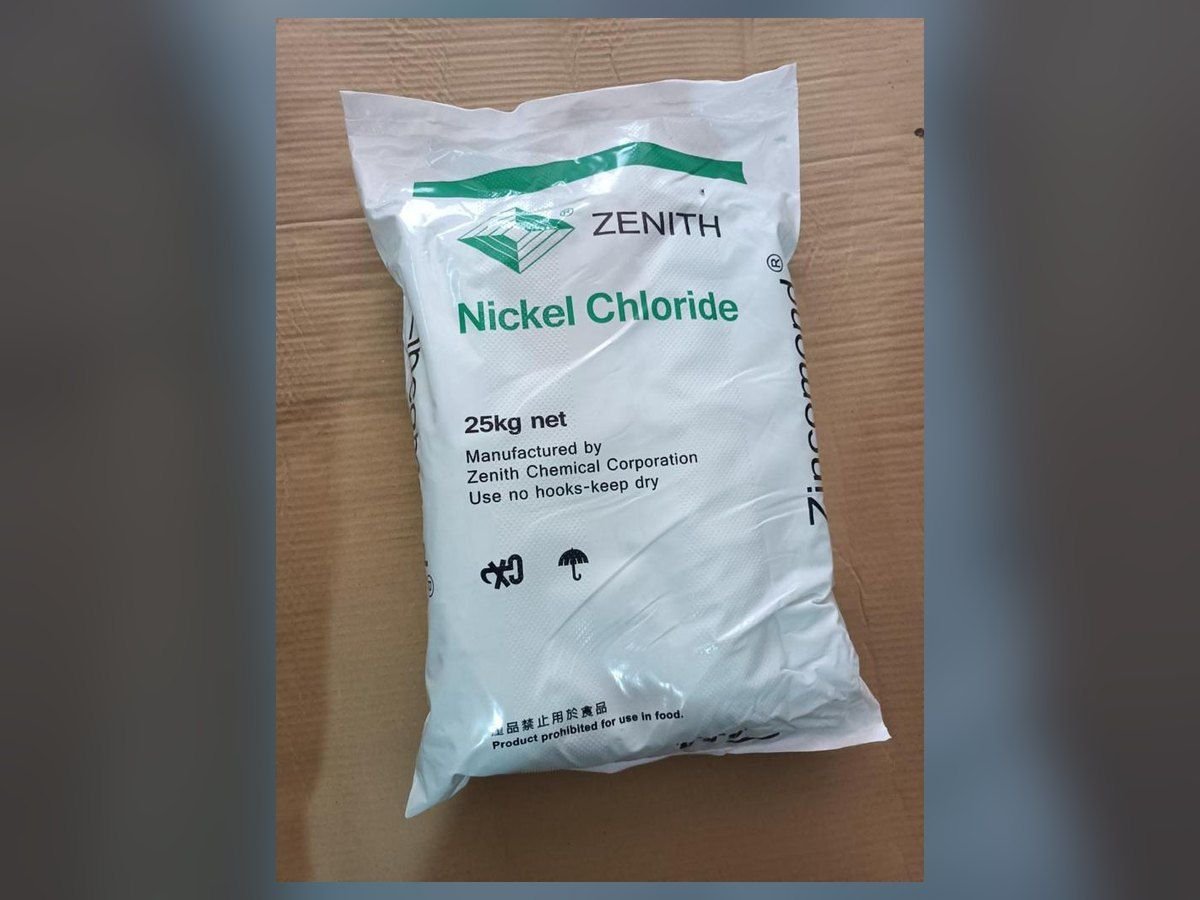
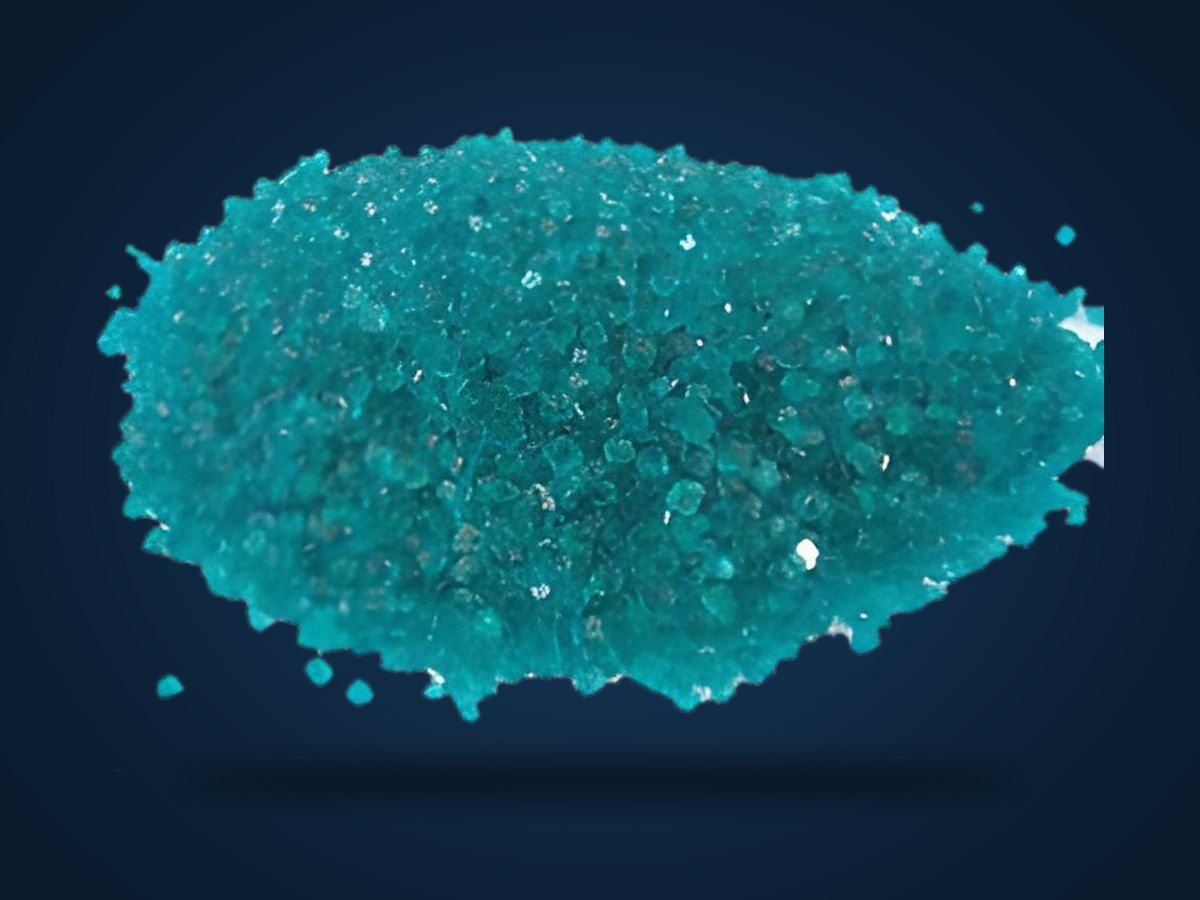
- Nickel chloride (NiCl₂·6H₂O) keeps the anodes dissolving evenly and raises the conductivity of the solution.
- Boric acid (H₃BO₃) buffers the pH, especially at the cathode surface where hydrogen evolution pushes the pH up.
Typical operating ranges
Published ranges vary by source and application. Treat the figures below as a starting point, and follow the technical data sheet for your brightener system where it differs.
| Parameter | Typical range |
|---|---|
| Nickel sulphate (hexahydrate) | 225–400 g/L |
| Nickel chloride (hexahydrate) | 30–60 g/L |
| Boric acid | 30–45 g/L |
| pH | 3.5–4.5 |
| Temperature | 45–65 °C |
| Cathode current density | roughly 2–10 A/dm² |
Keeping pH under control
pH is the parameter that drifts fastest, so it is the one to measure every shift. In a Watts bath the pH normally creeps upward during plating, because anode efficiency is slightly higher than cathode efficiency.
- To lower pH, add dilute, good-quality sulphuric acid slowly with good agitation, then re-measure after the solution has mixed.
- To raise pH, add a slurry of nickel carbonate. It dissolves slowly, so let the bath settle and filter before plating critical work.
A pH that runs too high tends to give rough, brittle or cloudy deposits as nickel hydroxide forms at the cathode. A pH that runs too low reduces cathode efficiency and can cause pitting.
Why boric acid matters
Boric acid is easy to forget because it is not consumed in the plating reaction, but it leaves the tank with every litre of drag-out. Without enough of it, the pH right at the cathode surface rises, nickel hydroxide is trapped in the deposit, and high-current-density areas start to burn.
Its solubility also falls as the solution cools. A bath run near the top of the range can grow boric acid crystals on the tank walls and heating coils overnight, so dissolve fresh additions in hot solution and avoid overdosing.
A simple maintenance routine
| How often | What to do |
|---|---|
| Every shift | Check pH, temperature and solution level. Look at the anode bags and top up the anode baskets. |
| Weekly (or by throughput) | Analyse nickel, chloride and boric acid, and run a Hull cell panel to check the brightener balance. |
| Regularly, on a schedule | Dummy the bath at low current density to plate out metallic impurities. |
| As needed | Carbon-treat to remove organic contamination and brightener breakdown products. |
| Continuously | Filter the solution to remove particles that cause roughness. |
Dummying means plating onto a large corrugated steel sheet at a very low current density, around 0.2–0.5 A/dm². At that current density, copper and zinc plate out preferentially, pulling them out of the solution before they cause dark or streaky deposits in low-current-density areas.
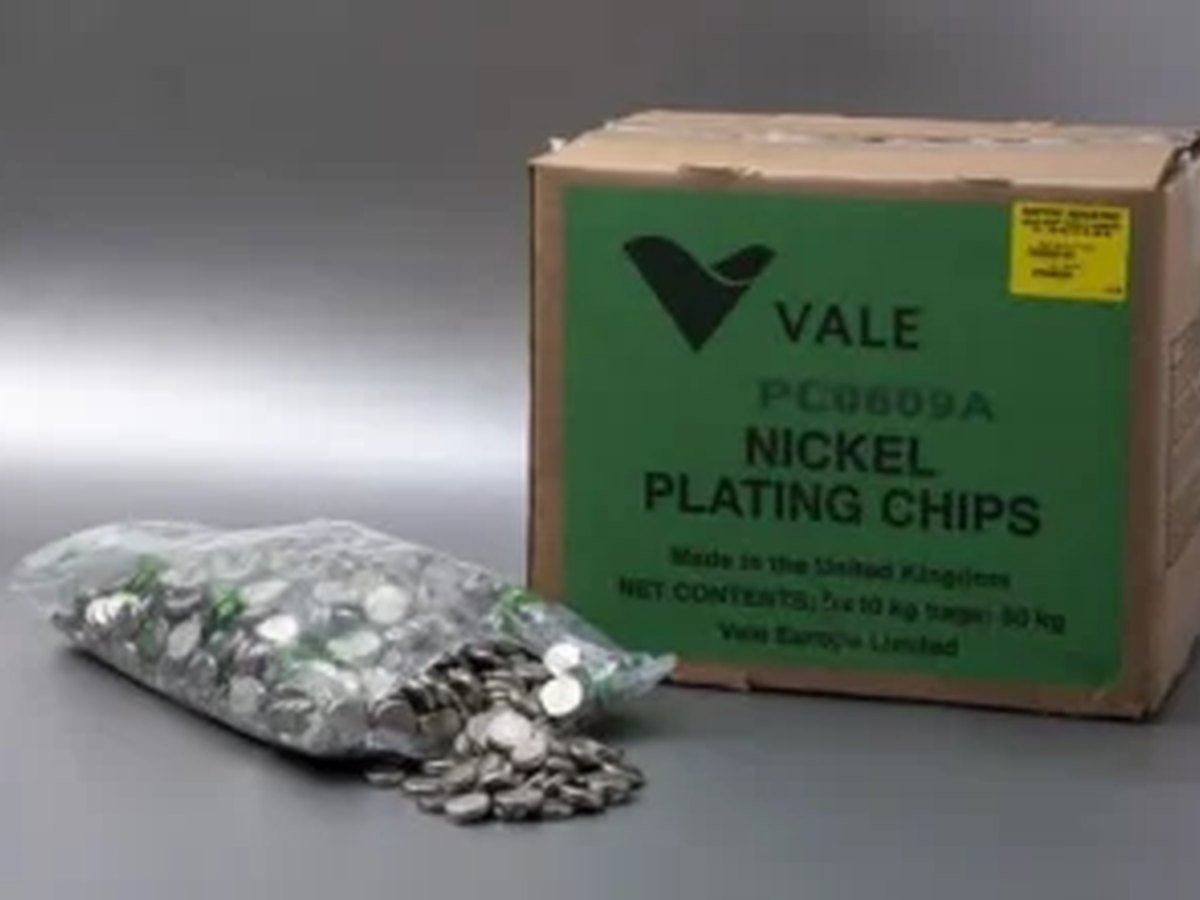
Anodes deserve the same attention as the solution. Keep titanium baskets full of nickel chips, or hang nickel anode plates, and aim for roughly twice as much anode area as cathode area. Bagging the anodes stops sludge from reaching the work. Our guide to nickel anode plates versus nickel chips explains how to choose between the two.
Troubleshooting common nickel plating problems
| Symptom | Likely causes | Where to start |
|---|---|---|
| Pitting | Organic contamination, low wetting agent, particles, poor agitation | Check filtration and wetting agent, then carbon-treat if organics are suspected. |
| Roughness | Suspended particles, torn anode bags, pH too high | Inspect the bags, check the filter and bring the pH back into range. |
| Burning in high-current areas | Low nickel or boric acid, current density too high, low temperature | Analyse and correct the salts, then review the racking and current. |
| Dark or streaky low-current areas | Copper or zinc contamination | Dummy the bath at low current density. |
| Brittle or stressed deposit | Organic contamination, excess brightener, high chloride | Run a Hull cell test, then carbon-treat or adjust additions. |
Brighteners and additives
A plain Watts bath gives a dull or semi-bright deposit. Bright decorative nickel relies on a nickel brightener system, usually alongside levelling and wetting additives. Add these little and often, based on amp-hour consumption and Hull cell results. Over-addition is a common cause of brittle, hazy deposits.
Safety note
Nickel salts are skin sensitisers, and nickel compounds are classified as carcinogenic by inhalation. Wear gloves, eye protection and suitable respiratory protection when handling dry salts, and follow the safety data sheet for every chemical in the bath.
Sourcing Watts bath chemicals in Pakistan
Sufat Chemicals supplies nickel sulphate, nickel chloride, boric acid, nickel anodes and chips, and bright nickel additives from Karachi to plating shops across Pakistan. If you are setting up a new bath or topping up an existing one, send us your tank volume and process and we will quote the full set. You may also find our comparison of nickel sulphate and nickel chloride useful.
Sources and further reading
- Wikipedia: Nickel electroplating
- Products Finishing: Nickel Electroplating
- Products Finishing: Impurities in a Nickel Plating Bath
- MacDermid Enthone: Preventative Maintenance for Bright Nickel Baths
Operating figures are typical published ranges for general guidance. Always follow the technical and safety data sheets for the specific products in your process.