Buyers new to nickel plating often ask which salt they should order: nickel sulphate or nickel chloride. For almost every bath the answer is both. They do different jobs, and the balance between them changes how the bath behaves.
The two salts at a glance
| Nickel sulphate | Nickel chloride | |
|---|---|---|
| Formula (as supplied) | NiSO₄·6H₂O | NiCl₂·6H₂O |
| Nickel content | about 22.3% by weight | about 24.7% by weight |
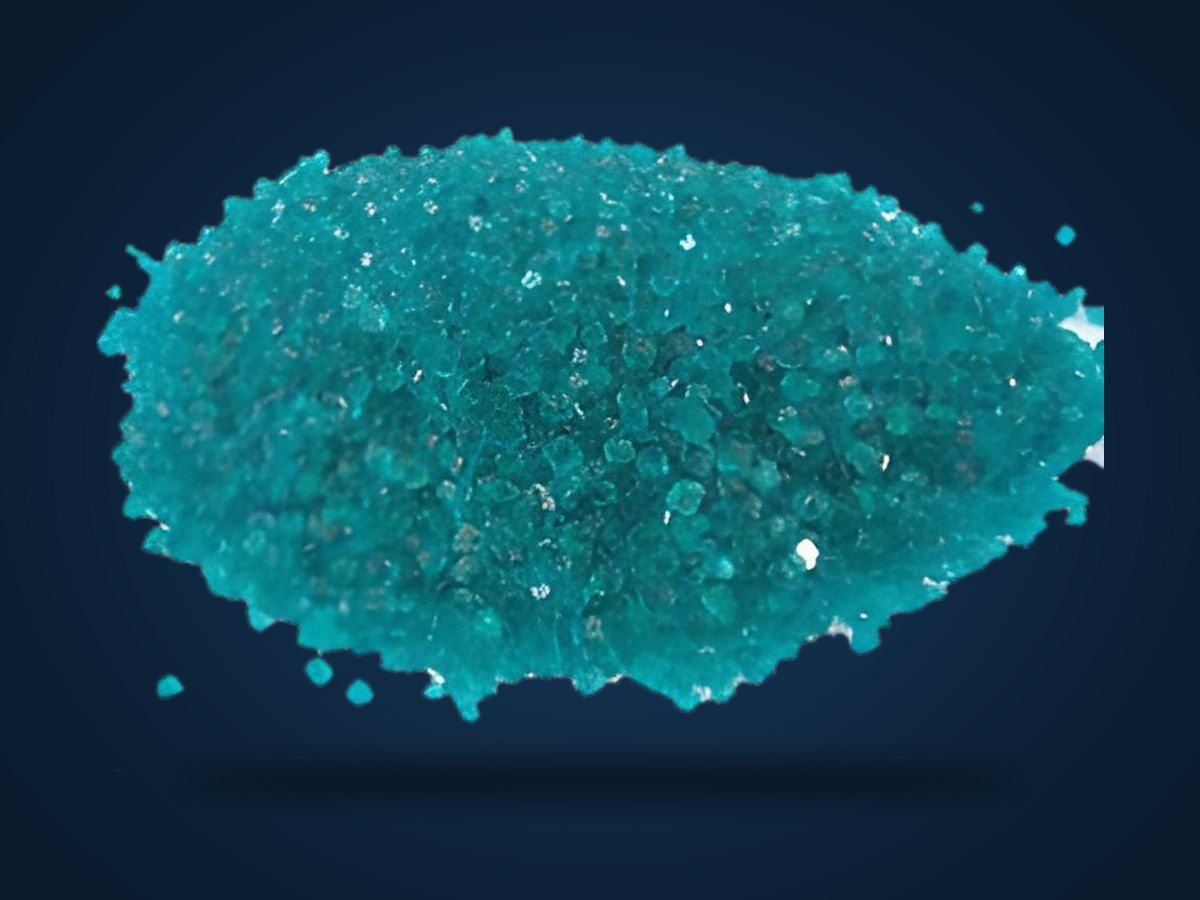
| Appearance | green to blue-green crystals | green crystals |
| Main role | main source of nickel ions | anode dissolution and conductivity |
| Effect on deposit stress | low | raises tensile stress as the concentration increases |
| Typical share of a Watts bath | the bulk: about 225–400 g/L | a minor part: about 30–60 g/L |
The nickel content figures come straight from the molar masses: 58.69 g/mol of nickel in 262.85 g/mol for the sulphate hexahydrate, and in 237.69 g/mol for the chloride hexahydrate. They are useful when you convert an analysis result in g/L of nickel metal back into salt additions.
What nickel sulphate does
Nickel sulphate is the backbone of the bath. It supplies the nickel that ends up on the part, and because it is the more economical source of nickel ions it makes up most of the dissolved salt. On its own, though, a pure sulphate bath has two weaknesses. Its conductivity is modest, and nickel anodes tend to passivate in it, which means they stop dissolving evenly.
What nickel chloride does
Nickel chloride fixes both weaknesses. The chloride ion attacks the passive film on the anodes, so they keep dissolving and replacing the nickel you plate out. It also raises the conductivity of the solution, which lowers the voltage needed for a given current and improves throwing power into recesses.
The trade-off is stress. As chloride increases, the tensile stress in the deposit rises. That matters for thick engineering nickel, for parts that are flexed, and for any deposit that has to resist cracking.
How to decide the balance
- Low chloride: choose this when low deposit stress matters more than throwing power, for example for thicker functional deposits or parts that must not crack.
- Standard Watts balance: this suits most decorative rack plating under bright nickel additives.
- High chloride: choose this when throwing power and conductivity matter most and a higher-stress deposit is acceptable, as in many barrel plating lines.
Whatever the balance, keep boric acid in range as well. It buffers the pH at the cathode in both sulphate-rich and chloride-rich baths. Our Watts bath maintenance guide covers the full routine.
What to look for when buying
For plating use, the salt's purity matters as much as its price. Metallic impurities such as iron, copper and zinc end up in your bath and show up as dark low-current-density areas or roughness. Ask for the grade, check that the crystals are free-flowing and not caked, and store sealed bags somewhere cool and dry. Nickel salts are skin sensitisers, so handle them with gloves and avoid breathing the dust.
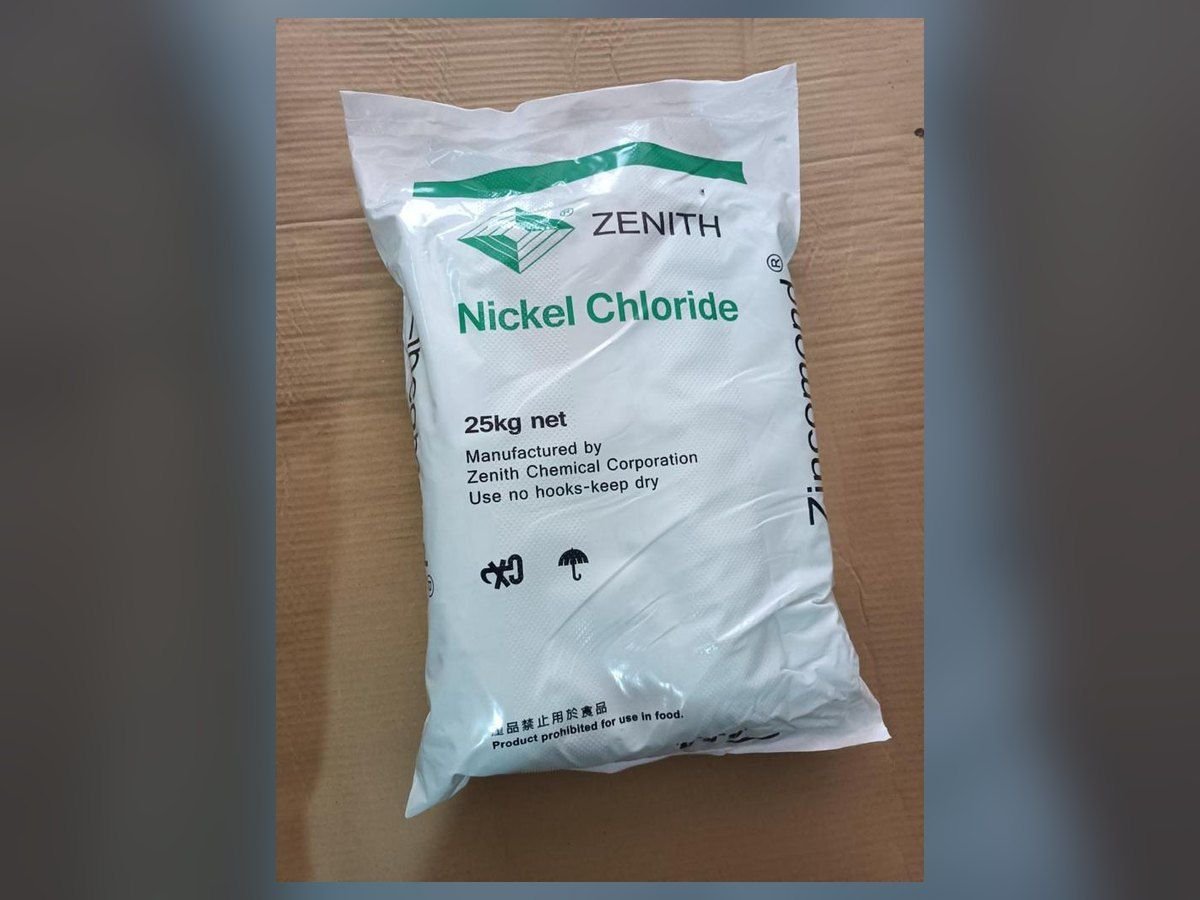
Nickel salt prices follow the international nickel market, so a quote is usually only valid for a short time. Sufat Chemicals keeps nickel sulphate (25 kg bags or drums) and nickel chloride (25 kg bags) in stock in Karachi. Request a current price or message us on WhatsApp with the quantity you need.
Sources and further reading
- Products Finishing: Nickel Electroplating
- Wikipedia: Nickel electroplating
- Technic: How to Maximize Nickel Plating Performance
Operating figures are typical published ranges for general guidance. Always follow the technical and safety data sheets for the specific products in your process.