Hard chrome is plated for wear resistance rather than looks. It goes on hydraulic cylinders, piston rods, rollers, moulds and tooling. The deposit is thicker than decorative chrome and the process runs harder, but the chemistry behind it comes down to a handful of materials.
The core chemistry
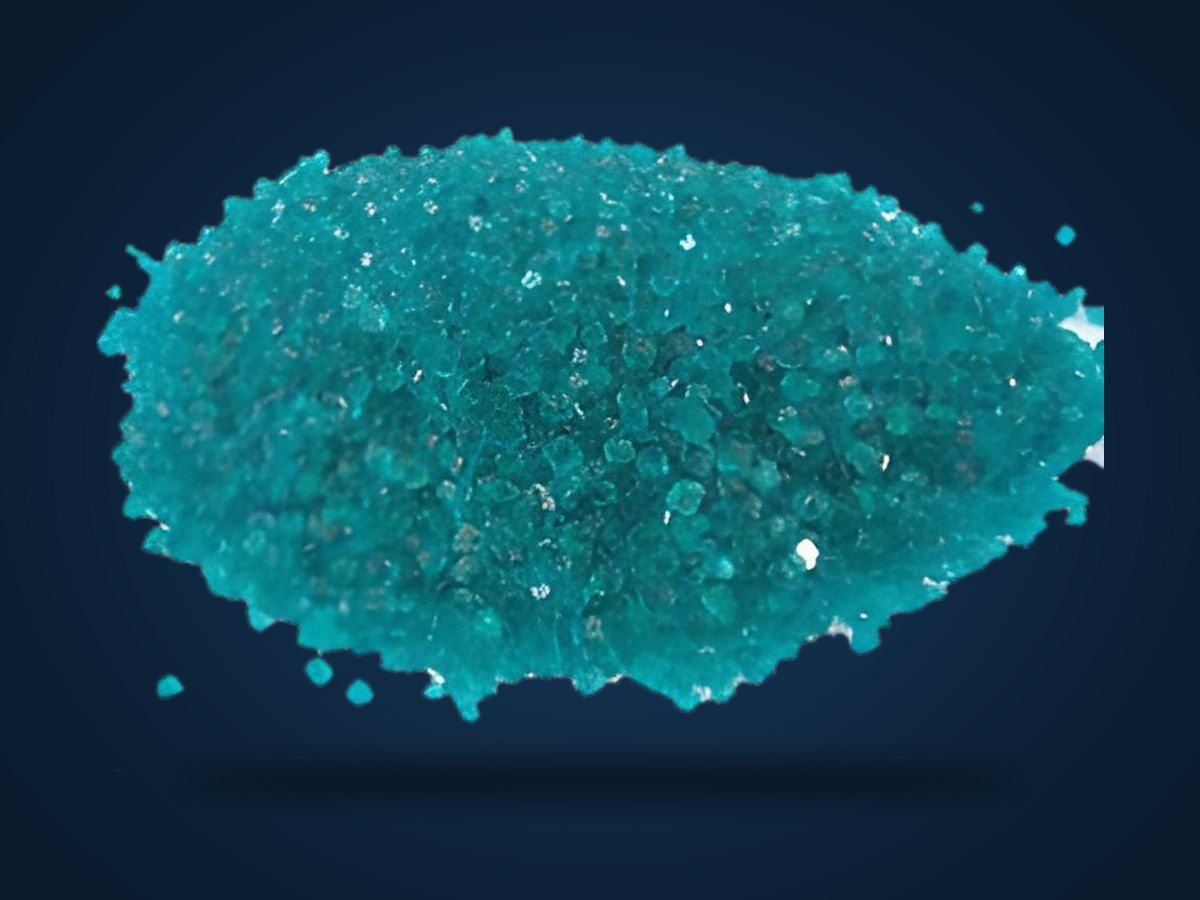
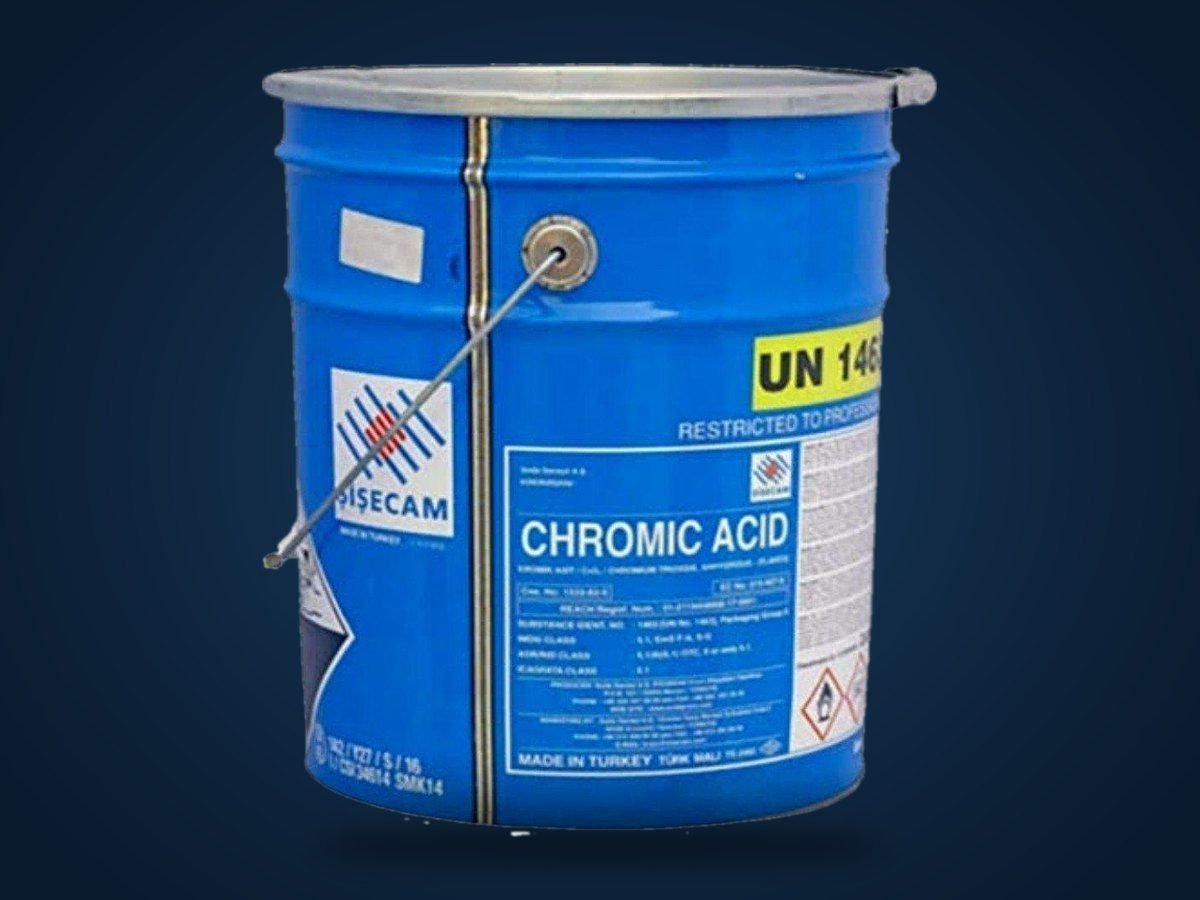
A chrome bath is unusual: it plates metal from a solution of chromic acid (chromium trioxide, CrO₃), in which chromium is hexavalent. Chromic acid on its own will not plate. Deposition only happens when a small amount of a catalyst acid radical is present, and historically that catalyst has been sulphate.
The 100:1 ratio
The classic formulation, often called the Sargent bath, runs chromic acid and sulphate at a ratio of about 100:1. What matters is the ratio, not a fixed amount of sulphate. A bath at 250 g/L chromic acid needs about 2.5 g/L of sulphate.
| Parameter | Typical hard chrome range |
|---|---|
| Chromic acid (CrO₃) | around 225–300 g/L (250 g/L is common) |
| Chromic acid : sulphate ratio | about 100:1 |
| Temperature | about 50–60 °C |
| Cathode current density | high: often 30–60 A/dm² |
If the ratio drifts, the bath tells you. Too much sulphate, which gives a lower ratio, narrows coverage and throwing power. Too little sulphate hurts brightness and deposit quality. Follow your process supplier's figures where they differ from the general ranges above.
Why mixed catalysts are used
Sulphate-only chrome baths are notoriously inefficient. Commonly quoted cathode current efficiencies are only around 12–15%, so most of the current goes into producing hydrogen rather than chrome. Adding a secondary catalyst, based either on fluoride compounds or on organic sulphonic acids, raises efficiency and deposition rate. Most hard chrome baths in use today are of this dual-catalyst type.
Our chrome catalyst additive is a proprietary mixed-catalyst blend that is dosed alongside chromic acid for exactly this purpose. It supports faster build-up and more consistent hardness on production work. When you choose any catalyst system, ask how it behaves in low-current-density areas. Some fluoride-containing catalysts can etch unplated steel, while non-etching systems avoid this.
Keeping the bath in balance
Sulphate creeps upward
Sulphate is not consumed, but it keeps arriving with impurities in the make-up water and the chromic acid itself. Left alone, the ratio slowly falls. Analyse sulphate regularly. When it runs high, it is usually reduced by precipitating it as barium sulphate with a controlled barium carbonate addition, then letting the precipitate settle.
Trivalent chromium
Some chromium is reduced to the trivalent state at the cathode. A little is normal, but too much lowers conductivity and deposit quality. Lead-alloy anodes re-oxidise trivalent chromium at the anode surface, so maintaining enough clean anode area is the main control. Lead and lead-alloy anodes should be kept free of thick, non-conductive scale.
Controlling mist
Because so much of the current makes hydrogen and oxygen gas, chrome tanks throw off a fine mist of chromic acid as bubbles burst at the surface. A chrome mist suppressant, together with proper extraction, keeps that mist in the tank. Our guide to chrome fume suppressants explains how they work.
Safety
Hexavalent chromium compounds, including chromic acid, are classified as human carcinogens, and they are strong oxidisers and corrosive. Store chromic acid sealed and away from organic materials and reducing agents. Handle it with full PPE, and never allow chrome solutions to reach drains. Follow the safety data sheet and local environmental rules for waste treatment.
Buying hard chrome chemicals in Karachi
Sufat Chemicals supplies chromic acid in 25 kg iron drums, along with chrome catalyst and suppressant additives and lead-alloy anodes, from our Karachi office to plating shops across Pakistan. Tell us your tank size and current process for a quote on the complete set.
Sources and further reading
- Products Finishing: A Chromium Plating Overview
- Finishing and Coating: Sulfate Control in Hard Chrome Baths
- Finishing and Coating: Benefits of a Triple Catalyst Bath
- Wikipedia: Chrome plating
Operating figures are typical published ranges for general guidance. Always follow the technical and safety data sheets for the specific products in your process.